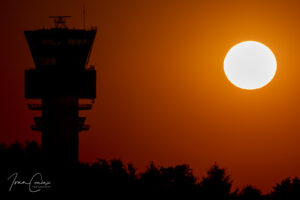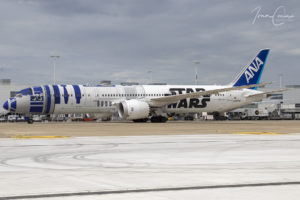
On Saturday 12 September 2026 the Aeroclub Sanicole hosted its annual Sanicole Sunset Airshow as part of its two-day International Sanicole Airshow in Belgium. I joined the event on Saturday evening to witness the outstanding flying displays of the many pilots who did their utmost to show their exceptional flying skills and push their aircraft to the very limit in front of tens of thousands of spectators.
Biggest airshow of the Benelux
Every year the Aeroclub Sanicole organises the International Sanicole Airshow, in close cooperation with the Belgian Air Force. During this two-day event, many of the world’s most renowned flying display teams – both civil and military – fly to Belgium to show their exceptional flying skills to the spectators. Recent editions of the International Sanicole Airshow welcomed the RAF Red Arrows , the Patrouille de France and the Frecce Tricolori. Unfortunately, none of these major aerobatic teams attended this year’s edition. The RAF Red Arrows were planned to give a flying display on Sunday, but they had to cancel their appearance at Sanicole last-minute due to operational and technical circumstances.
The place to be every year is the airfield of Leopoldsburg/Beverlo (EBLE), a small airfield just next to the Kamperbaan between Leopoldsburg and Hechtel-Eksel. Originally this small airfield was part of a large military base but nowadays it is a civil airfield and mainly used by the Aeroclub Sanicole for its flying activities. The airfield of Leopoldsburg/Beverlo only has a short and narrow runway (less than 2.000 ft long), so most aircraft (except helicopters) operate out of Kleine-Brogel Air Base which is just about 10 kilometers away. However, because of major renovation works currently in progress at Kleine-Brogel, flying displays for this year’s edition needed to operate out of Florennes Air Base (EBFS) or even Beauvechain Air Base (EBBE).
Sanicole Sunset Airshow
Traditionally, the first day of the International Sanicole Airshow is the so-called ‘Sanicole Sunset Airshow’, which usually begins in the late afternoon (around 17:00 local time) and lasts until right after sunset (around 20:30 local time). This allows the aerobatic flying teams to do ‘something out of the ordinary’ such as using pyrotechnics (fireworks or flares) to add a very spectacular extra dimension to their flying displays.
This year’s edition of the International Sanicole Airshow marked the 80th anniversary of the Belgian Air Force, the 85th anniversary of the Pearl Harbor attacks, and the 75th anniversary of the Belgian Air Force’s 31st Tiger Squadron, based at Kleine-Brogel Air Base. The overall line-up for the International Sanicole Airshow and Sanicole Sunset Airshow looked quite promising at the beginning, with confirmed appearances of the German Air Force (Luftwaffe) Eurofighter Typhoon and Panavia Tornado IDS, the RAF Red Arrows (only on Sunday) and even a Saab Viggen and a Saab Lansen from the Swedish Air Force Historical Flight.
Unfortunately all of the participants mentioned above (except for the German Air Force Panavia Tornado IDS) had to cancel their appearance last-minute due to various circumstances, including medical reasons. The Sanicole Airshow team did their best to find suitable (and available) backup teams and aircraft to perform during the weekend, including the Baltic Bees Jet Team. Nevertheless, the final line-up seemed to lack some more powerful fighter aircraft that many spectators like to see (and hear).
Fasten your seatbelt and get ready for a short photographic review of most of the participants of the 2026 Sanicole Sunset Airshow.
SkyHawks / Black Devils / CC-130J Hercules
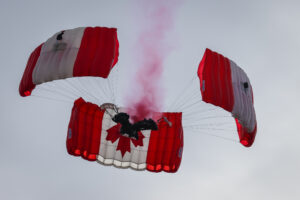
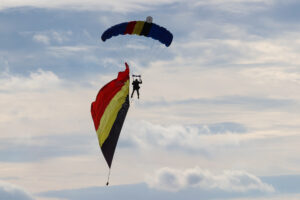
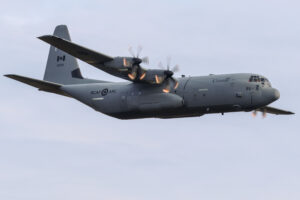
The first demo team of the 2026 edition of the Sanicole Sunset Airshow were the SkyHawks, the Canadian Forces’ parachute demonstration team, in collaboration with the Black Devils, the parachute demonstration team of the Belgian Defence. Both teams used a Royal Canadian Air Force (RCAF) Lockheed Martin CC-130J Hercules for their flying display. After an impressive demonstration of both teams, the RCAF CC-130J Hercules made a low-level flypast in front of the spectators, making it the perfect ending for an impressive display.
Baltic Bees Jet Team
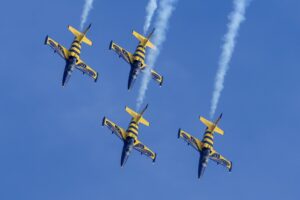
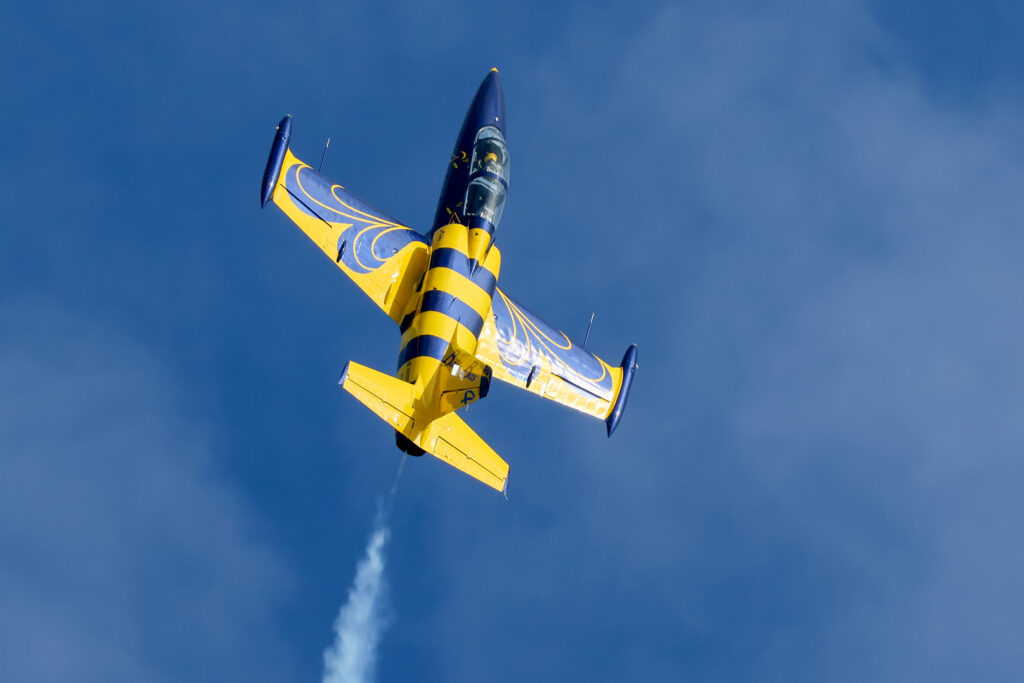
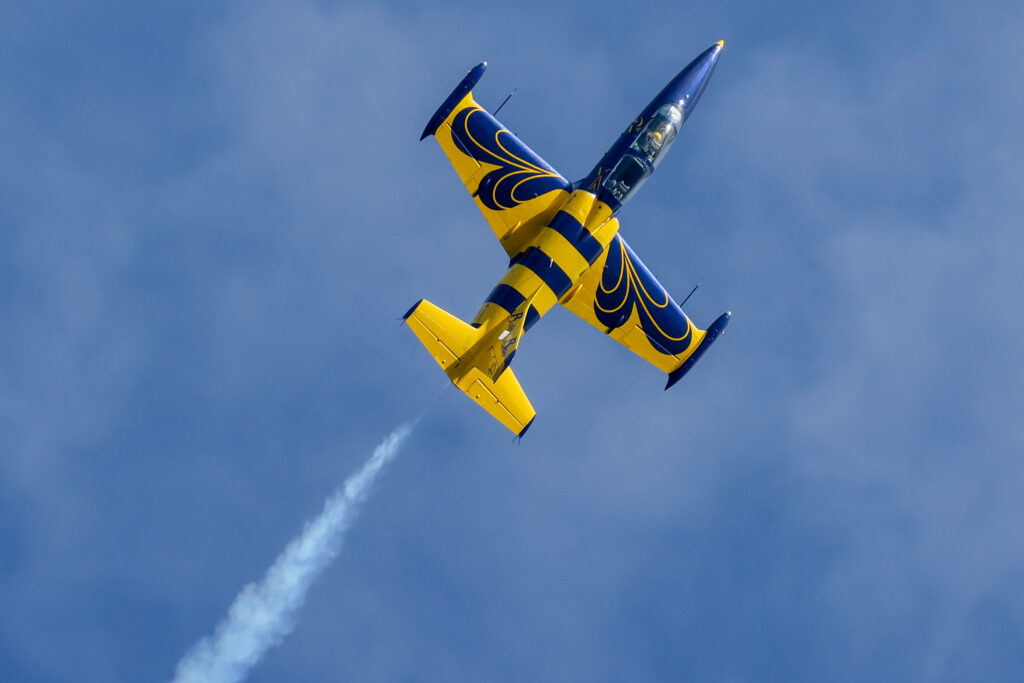
The second flying demonstration of the day was flown by the Baltic Bees Jet Team, one of the world’s leading civilian aerobatic display teams. The team was founded in 2008 and operates out of Jurmula Airport near Tukums in Latvia. The team’s fleet consists of nine Aero L-39C Albatros jet training aircraft but usually they operate just four aircraft during an aerobatic flying demonstration. This was the very first time that I saw the Baltic Bees Jet Team but their flying display was quite impressive with several epic flying maneuvers, pushing the Baltic Bees Jet Team pilots to the very limit of their flying skills. If you’re hungry for more, you can even book a flight with the Baltic Bees Jet Team and fly in one of their Aero L-39C Albatros aircraft. More info on the official website of the Baltic Bees Jet Team.
Gazelle Squadron Display Team
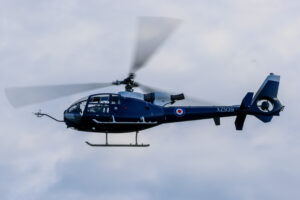
Next up were the two Westland SA 341 Gazelle helicopters of the Gazelle Squadron Display Team, who performed their very first overseas flying display ever and showed the spectators that helicopters can perform some nice aerobatic maneuvers, certainly in a 2-ship flying display.
North American F-86 Sabre
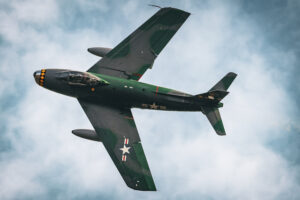
I’m confident this fighter aircraft needs no introduction: the legendary North American F-86 Sabre. The design of this first-generation, swept-wing, jet-powered fighter aircraft goes back to the 1940’s when North American Aviation submitted a design to the United States Army Air Forces (USAAF) for a jet-powered fighter / bomber aircraft. The F-86 Sabre entered service in 1949 and became an iconic fighter jet. Eventually almost 10.000 F-86 Sabres were built. The aircraft performing the flying display during the Sanicole Sunset Airshow is in fact a Canadair CL-13B-6 Sabre with civil registration F-AYSB. It is the only airworthy F-86 Sabre in Europe and was added to the fleet of The Flying Bulls in May 2026, having previously displayed under the Mistral Warbirds name. It is piloted by Frédéric Akary.
Royal Jordanian Falcons
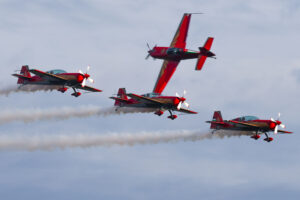
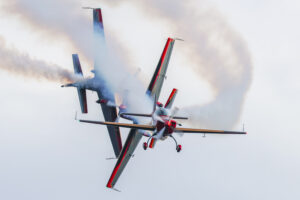
The next aerobatic display team of the day were the Royal Jordanian Falcons, the Jordanian national aerobatic team formed in 1976 at the initiative of His Majesty the Late King Hussein Bin Talal. The Royal Jordanian Falcons operate 4 Extra 330LX aircraft. The Extra 330XL is a single-engine aircraft powered by a Lycoming AEIO-580-B1A piston engine, capable of 315HP at 2.700RPM. The pictures below make it clear that the aerobatic flying display of the Royal Jordanian Falcons was quite breathtaking.
Messerschmitt Me-262
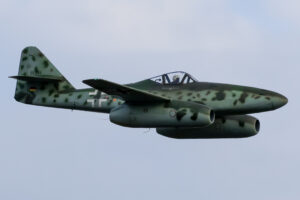
Another iconic aircraft that needs no introduction is the Messerschmitt Me-262 Schwalbe, the world’s first jet-powered fighter aircraft. The design of the aircraft goes back to World War II. It was designed and manufactured by German aircraft manufacturer Messerschmitt. Its maiden flight with Junker Jumo 004 jet engines was in 1942. Some 1.430 units were built, but most aircraft were destroyed during and after World War II. The Czechoslovak Air Force operated a few units until 1951. The airframe performing the flying demonstration during the Sanicole Sunset Airshow is a modern, flyable Me-262 reproduction built by Texas Airplane Factory in the United States. It made its maiden flight in 2005, after which is was dismantled and shipped to Manchin, Germany where it was reassembled and readied for service as a working display and heritage platform.
The Flying Bulls
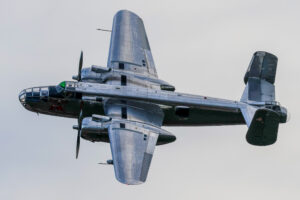
The Flying Bulls demonstration team gave an impressive flying demonstration – including several low-level flybys in close formation – with some of the most iconic and historic aircraft in their fleet, including the North American B-25J Mitchell, the Lockheed P-38 Lightning and the Chance Vought F4U-4 Corsair. The sight of these historic aircraft was already quite impressive, but hearing all these rumbling piston engines as the aircraft made another low-level flyby was quite a thrill.
German Air Force (Luftwaffe) Panavia Tornado IDS
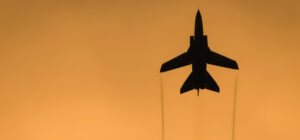
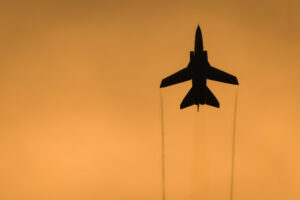
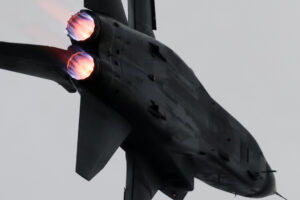
By the time the Fying Bulls’ impressive flying display came to and end, it was almost 19h00 LT and the sun was getting lower on the horizon. I think most spectators agreed that it was time for some heavy-duty afterburners, so in other words, it was a perfect moment to see the German Air Force’s Panavia Tornado IDS at work. The Panavia Tornado is undoubtedly one of Europe’s most iconic military jets with its distinctive swing-wing concept. It has been used by several countries for many years, but as the aircraft is currently writing the final chapter of its long career, we are very grateful that the German Air Force decided to revive its Tornado flying display. So as they say in Germany: ‘Vielen Dank, Luftwaffe!’
Raven 2XS
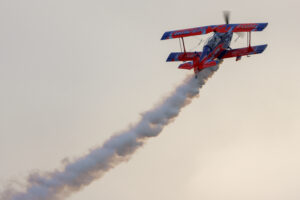
For a very brief moment, the skies over the airfield of Leopoldsburg/Beverlo became quiet again. Fortunately it didn’t last very long and just few moments later the spectators could enjoy some stunning aerobatics and cool engines sounds again, as Florent Oddon and his Raven 2XS showed up on the horizon. The aerobatic display of this pilot and his aircraft are truly second to none, no wonder Florent Oddon won three consecutive FAI World Aerobatic Championchip titles (2022 in Leszno, Poland – 2024 in Zamość, Poland and 2026 in Mason City, Iowa, USA).
MiG-17
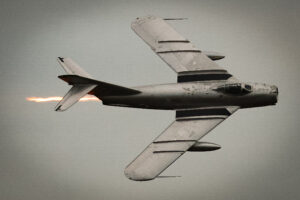
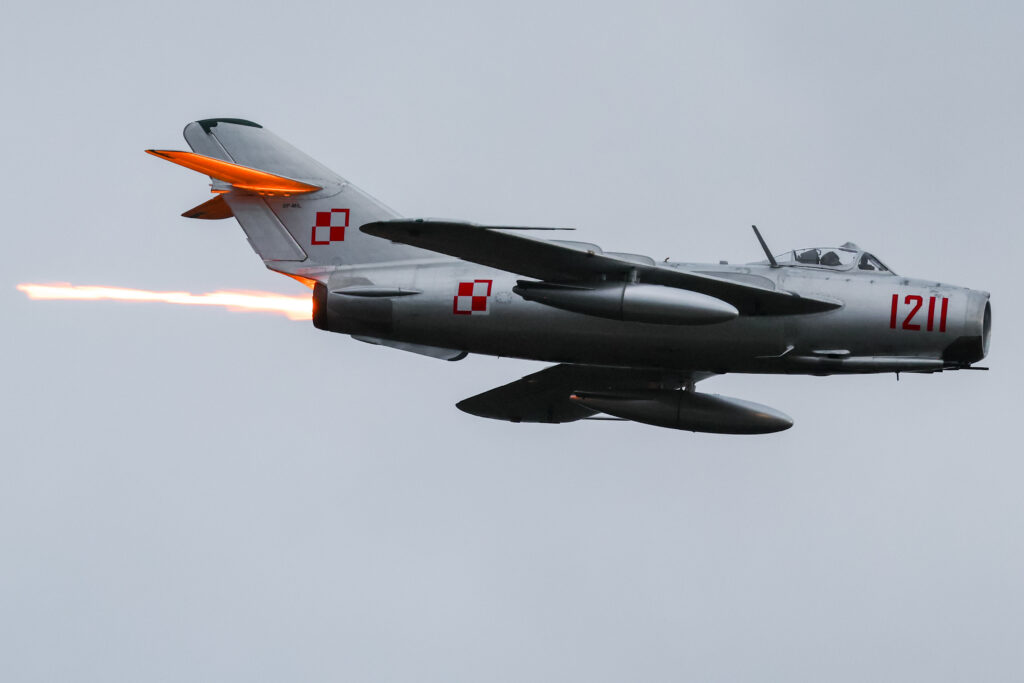
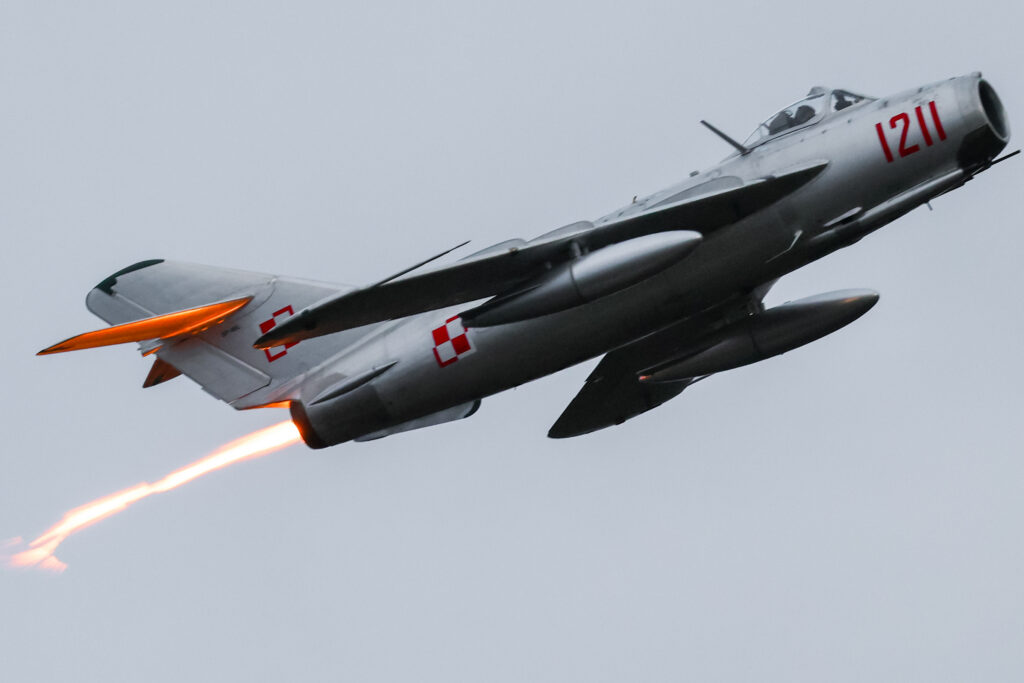
After an impressive flying display from both Florent Oddon and his Raven 2XS as well as Team Raven (one of Europe’s largest civilian formation aerobatic display teams) (yet for some strange, unknown reason I did not take any photos), another iconic aircraft was ready to reach for the skies and give a truly memorable flying display in front of an ecstatic crow: the Mikoyan-Gurevich MiG-17F. Today’s aircraft SP-MIL is in fact an aircraft constructed in 1958 under license in Poland, hence the designation ‘PZL-Mielec LIM-5’. Owned and operated by FUBAR Aviation – a Polish company that maintains, restores and flies historic Cold War jet fighters – its entry into ‘the box’ was quite remarkable as it made a first low-level high-speed pass with its afterburner, the latter being a testimony to the aircraft’s powerful Lis-5 jet engine. The next ten minutes this aircraft really ‘owned the skies’ and gave a stunning flying display including several high-speed passes, making it one of the highlights of this year’s edition of the Sanicole Sunset Airshow.
BushCat Demo Team
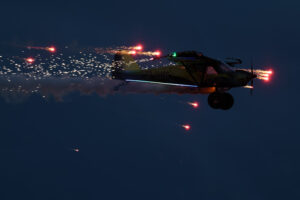
It was almost 20:00 LT and the sky was getting quite dark. Hence, it was time for some special teams to enter ‘the box’. After a first stunning pyrotechnics performance by the Flying Dragons Team (a well-known motorized paragliding and aerial display team based in Cracow, Poland) the next star of the 2026 Sanicole Sunset Airshow was the BushCat Demo Team, a Polish aerial display act from Bydgoszcz, Poland. The two pilots, Dominik Motola and his wife Magda Motola, fly a self-built Rainbow Skyreach BushCat with registration SP-SMOG. Their flying display features pyrotechnics, bright LED flares and colorful smoke.
Fire
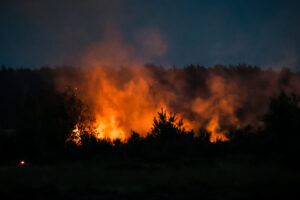
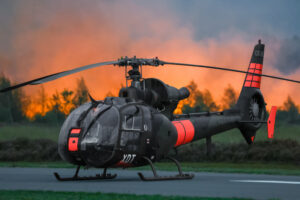
Unfortunately it seemed that the abundance of pyrotechnics used by the BushCat Demo Team had some unscheduled consequences as multiple wildfires broke out during their flying demonstration. Bright orange flames became visible and just a few moments later there was a public announcement that the flying displays were put on hold until further notice. The airfield fire brigade quickly responded and tried to put out the multiple wildfires, but it was appeared to be more difficult than initially anticipated. Eventually the airfield fire brigade needed to upscale and requested assistance from local fire brigades in the nearby towns. The Gazelle Squadron even opted to fly their Gazelle helicopters out of the airfield to prevent any possible damage to their helicopters.
Eventually I decided to call it a day since it was clear that there would be no more flying today. So I packed my photo gear, walked to my car a drove back home. Eventually the organizers managed to do one more final act: the drone show. Looking at some photos from other photographers it appears that it was quite spectacular as well, but I had seen to much pyroytechnics and wildfires so decided to rather be safe than sorry.
Thank You
I would like to thank the entire Sanicole Airshow team (including the many volunteers) for organising another great (or dare I say ‘memorable’?) edition of the Sanicole Sunset Airshow, despite some last-minute cancellations and the wildfires. As I am writing this post, I already know that what happened during the Sanicole Sunset Airshow of 2026 was even nothing compared to what happened on Sunday 13 September 2026, when heavy rainshowers, poor visibility and low clouds ruined mostly the entire second day of the International Sanicole Airshow. Most flying displays had to be cancelled until the very late afternoon and thousands of spectators were probably very disappointed. Unfortunately no one controls the weather and safety always comes first. Let’s hope for much better (meteorological) conditions in 2027!
12 September 2026